



Message by Iranian Minister of Cooperatives
To the First International Conference on Cooperative Social, Economic and Cultural Capabilities
April ۱۶-۱۷, ۲۰۱۱, Kish Island-IRAN
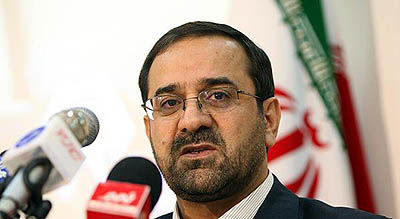
To the First International Conference on Cooperative Social, Economic and Cultural Capabilities
April 16-17, 2011, Kish Island-IRAN
In the Name of Allah
Strategies of Iranian Cooperative Sector's Development
Cooperate for Goodness and Piety but Cooperate not for Sin and Hostility (The Holly Qur'an)
Ladies and Gentlemen;
First of all, hereby, I would like to express my gratitude with such a scientific and unifying event; and then I am going to elucidate on the strategies for cooperative development in the Islamic Republic of Iran, especially on the role of cooperative economy in the country.
Since the Triumph of the Islamic Revolution under the leadership of Imam Khomeini, the government of the country has been tried to be aligned with Islamic rules. The objectives of the Islamic Economy are as the following:
Elevating human spiritually;
Economic autonomy;
Economic justice;
Public welfare;
Economic growth with Social justice
Islamic Economy is based on participation and empathy, following the Holly Qur'an, Holly Prophet's Example, and rules set by the teachings of Imams. The rules and regulations of such a system is founded on Social Justice and Divine Worldview, observing which secures production increase, fair distribution of goods and services, legitimate and moderate exploitation of God's gifts with freedom for all.
Integration, cooperative spirit and self-devotion are of the characteristics of the Islamic System. In the Advent of Islam, to secure Social Justice, the Holy Prophet Started out Cooperation by establishing brotherhood between the different groups. Because economic justice is part to social justice, it is another general pillar of the Islamic Economic System, which in a simple word, means equal access to facilities and fair distribution of wealth.
Economic Justice will be realized when the grounds for public participation and "cooperation" is prepared in all social and economic arenas. Thus, all individuals will share the sense of responsibility in accomplishing respective plans and will preserve truth and justice. Consequently, without public cooperation, empathy and equality of opportunity, not only "social justice" and "economic justice" won't be attained but also people will be struggling increasingly with wealth accumulation by a few, lack of economic prosperity, poverty and class inequality.
Seeing the general view of the Islamic Republic of Iran, it can be learnt that the economic rules are tried to be aligned with the aforementioned Islamic insights. This is why beside two other economic sectors i.e. Private and Governmental, Cooperative Sector has been included in the Iranian Constitutional Law.
The statutory basis of cooperatives is considered as a strategic policy in view of the fact that empathy and cooperation, recommended by religious teachers as two inborn characteristics of human beings are necessary for social development and progress while decreasing their agonies.
We are on the belief that although developing cooperatives apparently aims at satisfying people's material and economic needs, deep down it is functioning to attain true spirituality which would serve as the unifying ground for all. As a result, the changes cooperatives make to the society will be in favor of the majority having chosen self-help and cooperatives over individualistic actions.
If cooperatives develop to such an extent that they include majority of the members of the society and hence, make the changes that are expected by the Cooperative Movement, ambitions like fair distribution of wealth, poverty eradication, and decreasing class inequality will be most likely to realize.
The Constitutional Law of the Islamic Republic of Iran, as the expression of the will of Iranian Umah, has urged the development and reinforcement of cooperatives for the purpose balancing Governmental and Private activities in the context of Islamic values and principles. So, Cooperative sector as one of the triple economic sectors, functions to pave the way for people's participation
Experts suggest that attaining the sublime status predicted in the Twenty-Year Vision calls for prerequisites like realization of potentialities provided in Articles 43 and 44 of the Constitutional Law, the two Articles which depict strategic basis of the National Economy.
Articles ۴۳ and ۴۴ obviously emphasize the Cooperative Sector. Article ۴۴ attaches specific importance to the Sector as one of the National Economic Sectors. According to Article ۴۳, Cooperative Sector is obliged to provide means for work for all for the purpose of attaining complete employment, preventing wealth concentration in the hands of the few and precluding the Government Sector from growing up to the sole employer. Section ۱ of the Cooperative Law of the Islamic Republic of Iran reads the objectives of the Cooperative Sector as the following:
- providing means of work for all to attain complete employment;
- rendering means of work at the disposal of those who are able to work but are deprived of them;
- preventing wealth concentration in the hands of few individuals and groups to secure social justice;
- precluding the Government from becoming the sole employer;
- rendering management and capital and resultant interests at the disposal of the labour force and encouraging direct exploitation from one's own labour;
- preventing monopoly, speculation, inflation and harming others;
- development and reinforcement of participation and cooperation among grassroots.
In recent years, in line with the provisions of the Twenty-Year Vision, the necessity of a re-emphasis on Article ۴۴ was well recognized by the Supreme Leader. The re-emphasis, which was officially declared as the General Policies on Article ۴۴ has proved to be truly a turning point for economic mutation of the nation. However, the entire materialization of the Policies calls for the convergence of the executive bodies on the one hand and increased public awareness on the importance of the commitment which they are to assume.
The strategic point of the Policies is that once they are realized, the role of the Government as the owner and holder will shift to policymaking, supervision and guidance. Consequently, government's presence will decrease in the economy, giving way to non-government ones -public, private and cooperative- to take on economic enterprises. To attain this, the organized participation of the grassroots in the economy along with management, knowledge and skill standards would lead to the maximum utilization of the tangible and intangible national resources and to an accelerated economic development by connecting scattered capitals to the economic merits of the nation.
Out of the four paras A, B, C and D of the Strategic General Policies on Article ۴۴, para B specifically addresses the general policies of the Cooperative Sector in ۱۱ provisions as follows:
1. increasing the share of the cooperative sector to 25 percent of the GDP by the end of the Fifth Development Plan;
۲. government's remedial action in formation of cooperatives for the unemployed in line with productive employment;
3. governmental support to the formation and development of cooperatives through means such as tax exemption, credit facilities through the whole national banking system, and avoidance from applying any further charges to cooperatives than applied to the Private Sector;
۴. removing barriers to the activity of cooperatives in all economic arenas including banking and insurance;
5. formation of the Cooperative Development Bank (CDB) with Governmental capital for the purpose of enhancing cooperatives' share in the national economy;
۶. Governmental facilitation for cooperatives in terms of access to end markets and fairly providing them with comprehensive information.
7. State administration through policymaking, supervision on the execution of the rules and regulations and avoidance from intervention in cooperatives' executive and managerial issues;
۸. improving technical and vocational training as well as other supports for the purpose of increased efficiency and empowerment of cooperatives;
9. flexibility and diversity of capital raising solutions, issuing shares in the Cooperative Sector; and adopting necessary measures so that new versions of cooperatives- on public joint stock basis with a share limit per person which is described by law- become feasible.
۱۰. Governmental support to cooperatives in proportion to the size of their membership;
11. formation of National Inclusive Cooperatives to cover the three lowest-income deciles for poverty eradication.
Policies of Para "B" Article 44 of the Constitution underlines issues at large and small scales such as increasing share of cooperative sector of national economy, employment generation, encouraging cooperative establishment and development, founding Cooperative Development Bank, market development, policymaking, development of technical and vocational trainings, boosting capital and share distribution, and establishment of National Inclusive Cooperatives to support the three low-income deciles, along with pursuing the goal of poverty alleviation aiming at enhancement of social justice.
Therefore, the issue of supplying required resources of investments on the one hand and fair distribution of income arising from economic growth on the other hand resulted in more concentration on cooperative sector capabilities as a strategic issue.
Studies show that cooperatives in Iran and other countries play a significant and impressive role in pooling resources of average and low income social classes while reducing expenditures and lowering prices of supplying their needs and equitable allocation of facilities and incomes, particularly at the time of "economic hardship".
Quality and quantity development of cooperatives aiming at identification, encouragement and empowerment of average and low income strata, specially the three lowest-income deciles for establishment of cooperatives and consequently, for the provision of their needs in general and productive employment, proper housing and welfare services as well as empowerment of crafts owners, private businesses, guilds, self-employment, and SMEs in form of cooperative enterprises in order to ensure their powerful presence on the economic scene are among general Policies ordained by the Islamic Republic Supreme Leader.
In the course of cooperative development, a new generation of cooperatives, known as "Public Joint Stock Cooperatives", was developed. In nature, it is a "cooperative" and a "public company" at the same time. As per regulations, the maximum number of shares by each stockholder is limited and cooperative staff and other micro share owners would be able to take part in cooperative management. This type of cooperatives may play an efficient role in amassing small and medium capitals and "ensuring necessary resources for medium and large scale investments" by means of legal incentives with an emphasis on "social justice".
One of the core activities by Iranian Cooperative Sector to boost cooperative capabilities and to guarantee small, medium and large investments is cooperative banking.
Private banking accounts for more than 20% of Iranian banking operation. It is expected to reach up to 50% by virtue of General Policies of Article 44.
The Cooperative Development Bank was established in Iran; however, "credit cooperatives" have also been formed to render interest-free services, called Qarzolhassaneh (interest free loan) in Islam, which include a major part of "unorganized credit operation". Within the framework of the Act on enforcement of General policies of Article ۴۴, the following structures could be created in the field of cooperative banking:
1. Cooperative banks (public joint stock cooperatives);
۲. Cooperative finance and credit institutes (public joint stock cooperatives;
3. Interest-free loan credit cooperatives (conventional cooperatives;
۴. Cooperative credit unions (owned and managed by member cooperatives for member services);
5. Other finance credit institutes in form of public stock cooperatives.
Enabling structures have also been predicted in the public sector for further expansion and strengthening of cooperative sector such as:
1. Cooperative Development Bank
۲. Cooperative Investment Guarantee Fund to guarantee and to insure cooperative credit, investment and pledges. The two institutions provide supportive facilities to encourage cooperative sector.
With due regard to Cooperative Sector potentials, the government entrusted cooperative sector with the tasks and responsibilities of identifying, encouraging and empowering target groups and organizing them in a "major plan for housing development for medium and low income classes" entitled "Mehr Housing Plan". Accordingly and within the period of past three years, under the said plan over 1.5 million applicants of residential units were identified and organized in more than 10,000 housing cooperative societies. It is expected that 1.5 million suitable residential units are gradually constructed and delivered to their members by means of members' financial resources, supports from banking networks in form of low-interest services and government assistance.
Also in execution of privatization, the government decided to transfer the ownership of ۴۰ percent of the stocks of key public companies, known as Head of Article ۴۴, to ۶ lowest- income deciles, totally to ۴۲ million people of the lowest income social groups with special facilities such as "sales on ۱۰-year installment for a cash price sales" and "۵۰% discount in sales price for the two lowest- income deciles".
In order to prevent divergent opinions in the general assemblies of the huge community of companies to be transferred and to underpin the interests of the mentioned groups as micro shareholders, their "grouping" in form of cooperative organizations was included in the agenda.
The organization of the said micro shareholders in form of cooperatives will enable them to play a critical role in the management process along with other managers of major and key economic enterprises.
The influence of cooperative activities is also significant in the sector of water and farming, in land cargo and passenger transportation and in distribution of consumable goods. Cooperatives account for more than 20% of the market of agricultural products. Above 60% of bus, taxi and truck operation in the field of road and urban transportation of the country is run by transport cooperatives. Cooperatives also account for 90% of fishery and sea food production. It is interesting to know that half of the 165,000 cooperative societies established in Iran work in industrial, mining, agricultural and production sectors.
The Iranian Administration has set the goal to further develop cooperative sector by increasing cooperative share of GDP up to ۲۵% by March ۲۰۱۴. Such growth requires transformation of legal entity of most public companies transferred to "public stock cooperatives" while realizing about ۴۰% of new investments in form of cooperative organizations during the years of the Fifth Development Plan.
Certain strategic duties of the Islamic Republic could be traced in the recommendations by the Supreme Leader, which reveals the tendency and willingness of Iranian officials to encourage cooperative movement.
The Supreme Leader believes in and introduces cooperative sector as "country's means of power and key role actor in achieving the objectives of Islamic Republic in terms of social and economic justice" as well as "the most fundamental, rational and basic solution for establishment of true justice and country's savior of economy under the current circumstances and reducing dependence on oil resources".
He has stated: "Cooperative sector is very determining for the country in economic, social and even political aspects; nevertheless, it has been so far under repression; this is indeed a reality… cooperation is truly recognized, believed and acknowledged by Iranian statesmen.
Establishment of Ministry of Cooperatives as a government body is among key policymaking issues in the Islamic Republic. It is assigned for major tasks including individual empowerment to involve in the economy and employment, and finally to guide the society towards social justice through equitable distribution of opportunities and wealth.
About Ministry of Cooperatives, the Supreme Leader further stated: "Establishment of Cooperative Ministry is one of the valuable accomplishments by the government as this Ministry is quite urgent, at least for the current phase of employment (that we are very much in need of employment). Cooperatives are a must for us. I ask all cabinet members to express their opinions, to discuss and give their views for empowerment of cooperatives. Cooperatives must be encouraged and supported. Cooperatives are necessities for employment generation. I believe no other administration at national level enjoys the potentials and facilities of cooperatives in certain sectors."
The Leader defines the strategic role of cooperatives in employment as "ebullient fountain of employment".
He describes cooperatives as the strategy for realizing social justice at national level: "When I think over our country, I found cooperative business something capable of rational and categorical confinement of injustice. That's why I believe in cooperation."
The strategic view of Dr. Ahmadinejad's Government and his Administration that loves serving society has expedited instructions for development of this sector in the new era of the country. Hopefully, during the recent years, cooperatives have experienced remarkable growth under the auspicious plans by the President and the approach for serious endeavor to serve the nation, to support and to pay more attention to the capabilities of the middle and poor classes.
I hope all nations throughout the world experience the gifts of prosperity, peace, friendship and justice by taking the advantage of teachings from great prophets and by the spirit of universal cooperation and mutuality.
M. Abbassi
Minister of Cooperatives
I. R. of Iran





ارسال نظر